Central Hospital
The CallerCentral Hospital is a thirteen-storey medical complex whose public entrance becomes the setting for a family’s urgent search for help and, in a separate episode, a disturbing newspaper story about the handling of the dead. Its ordinary facilities and steady public bustle contrast with the fear and uncertainty brought into its corridors by those seeking care.
Building and Public Entrance
The hospital is described as a square, thirteen-storey building constructed in 1964, with two wings added later. Its main entrance opens onto an information desk with a broad, curved counter made of light wood. Small blue-upholstered couches stand nearby for people accompanying someone to an examination or treatment. The entrance area also contains a large cafeteria, a kiosk with a florist’s shop selling ready-made bouquets, and a pharmacy.
The building’s scale and services are set against the daily movement through its entrance: people gather by the information desk, while voices, cups and glasses, lifts, and occasional telephone calls make the area a place of continuous activity. The description establishes a public institution in which urgent personal crises unfold amid routine visits and shared waiting space.
The Search for Help
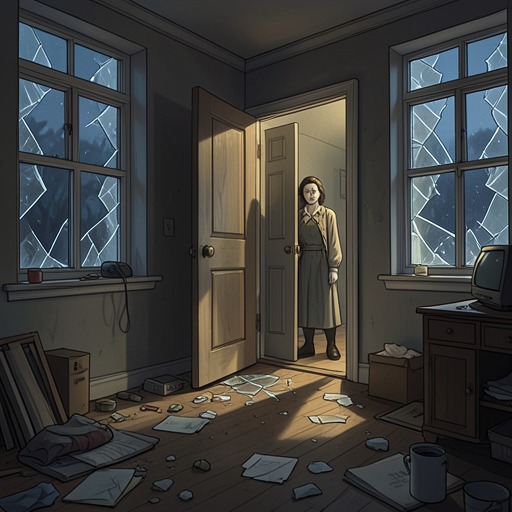
After Margrete is found with blood on her, Karsten carries her through the hospital in search of assistance, while Lily runs after him. Their recollections of the drive there are later indistinct; what remains is the urgency of reaching the building and getting help. Two nurses stop them. One takes Margrete through a door and tells the parents to stay where they are.
The waiting is described as a suspended interval between life and death. Relief comes when a nurse returns through the glass doors with Margrete wrapped in a white blanket. Karsten sees her moving her hands. The nurse tells them that the child is unharmed, then clarifies that the blood was not hers. The hospital’s examination resolves the immediate fear for Margrete’s safety, while the decision to call the police carries the incident beyond the family and into an investigation.
A More Troubling Account
Central Hospital also appears in a newspaper article Johnny reads aloud to Henry. Among several items, the report concerns the mishandling of dead bodies: some, it says, had been left for a month before being sent for cremation. The article introduces a sharply different association from the hospital’s response to Margrete. Here, the institution is not the site of a reassuring medical finding but the subject of a report about failures after death.
Johnny reads the news alongside stories about a horse, Polish immigrants’ working conditions, the weather, and television programmes, checking that Henry is following. The hospital report is therefore embedded in an ordinary act of reading and conversation rather than treated as a separate investigation. Its placement nevertheless links the building to the novel’s wider attention to mortality and to the systems that handle people at vulnerable moments.
Narrative Significance
The hospital’s scenes place public institutions at the boundary between private fear and official response. For Karsten and Lily, its doors mark the passage from alarm to the nurse’s finding that Margrete is unharmed; the call to police begins another consequence of the episode. The newspaper story offers no comparable reassurance, instead recording a failure in the treatment of the dead.
These contrasting references keep Central Hospital from functioning as a simple symbol of safety or danger. It is a working place of counters, waiting seats, services, and constant activity, but what happens there depends on the circumstances and on the people responsible for care. The novel uses the same institution both as a refuge sought in crisis and as the subject of a report that unsettles confidence in institutional procedure.